The Paradox Process: Web Development
A rebrand you can visit, and the platform underneath it.
- Role
- Full-Stack Developer & Technical Director
- When
- June 2024 — present
- Stack
- Next.js
- React
- TypeScript
- Tailwind
- Stripe
- Sanity
- PostgreSQL
- Resend
The problem
A coaching company with a real method — and a digital presence the team had built themselves, well outside their comfort zones, that genuinely carried the business for years. But it had grown heavy to run: rented software everywhere, and a monthly ritual where a senior practitioner hand-assembled a class page, a checkout, an automation, a tag, and a batch of emails. The tools didn't help — Keap couldn't even send an email relative to a custom date. Hours of expert focus going to setup work a system should do.
Before and after

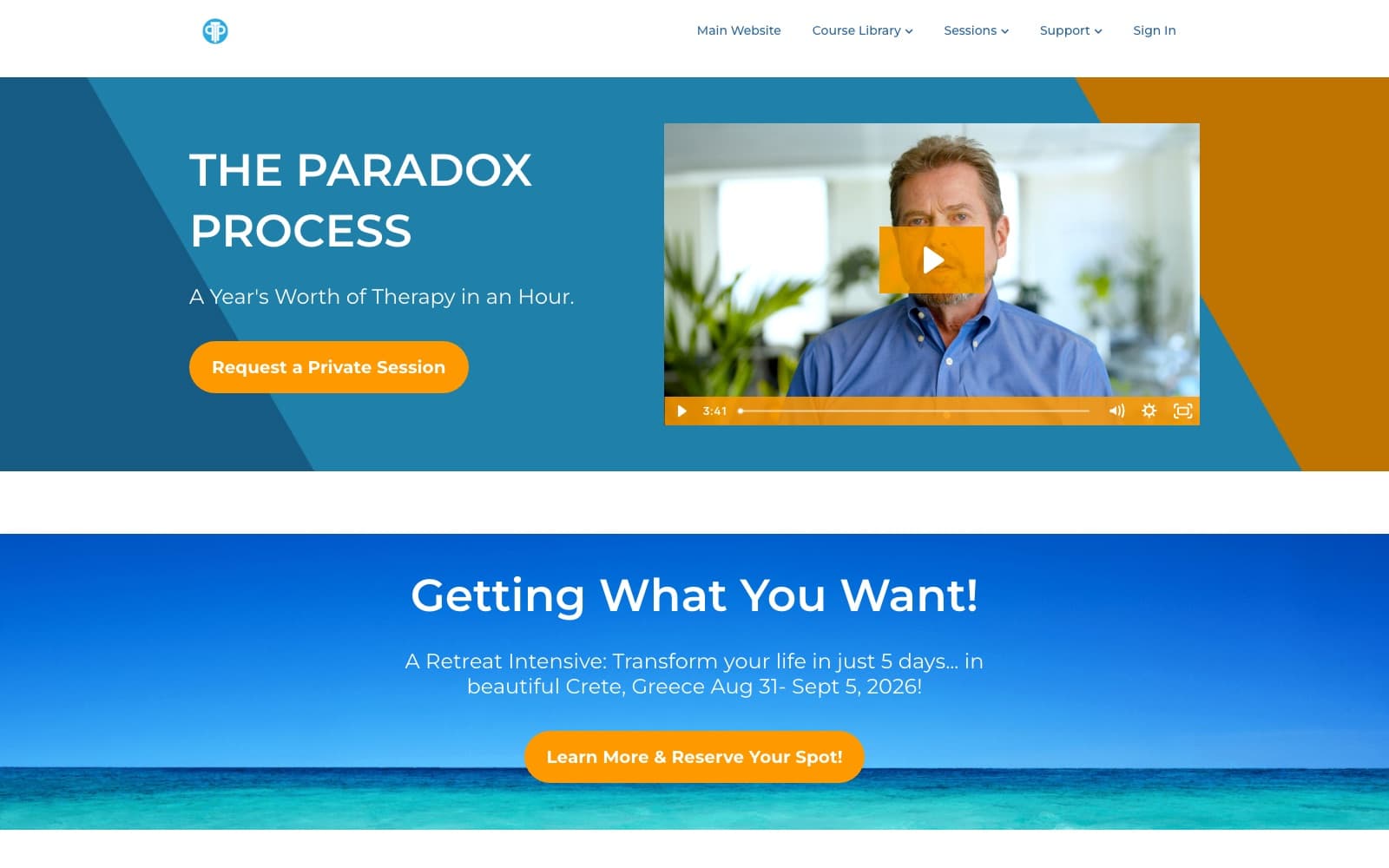
Drag the slider, or use arrow keys. The right side is the live site at paradoxprocess.org — this is not a mockup.
Look at the headline on both sides: it's the same promise. The message was never the problem — the team knew exactly who they were, and they built that first site themselves, far outside their comfort zone. It carried the business for years, and I admire it. My job wasn't to fix their vision. It was to give it the craft it deserved.
More of the live site
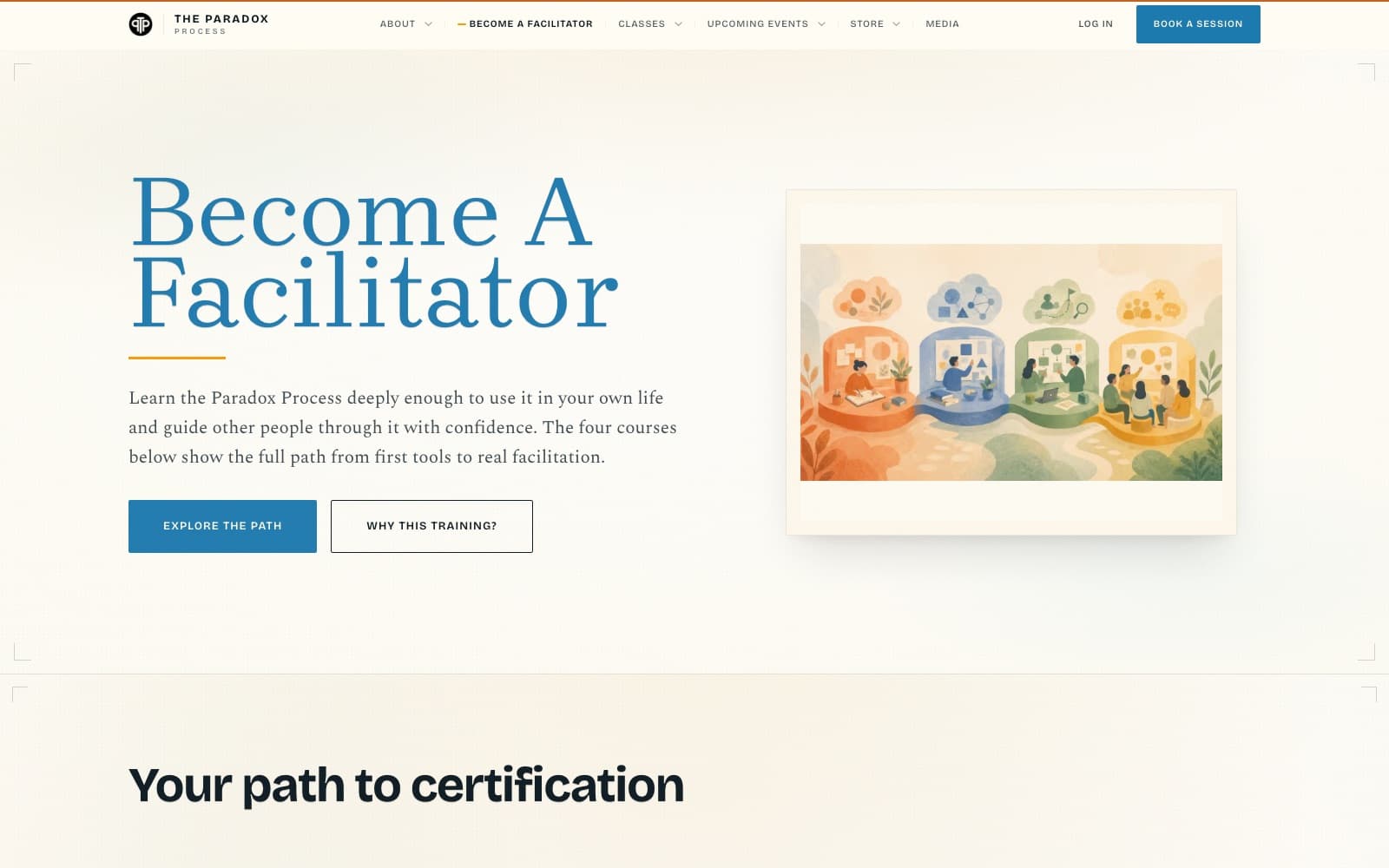
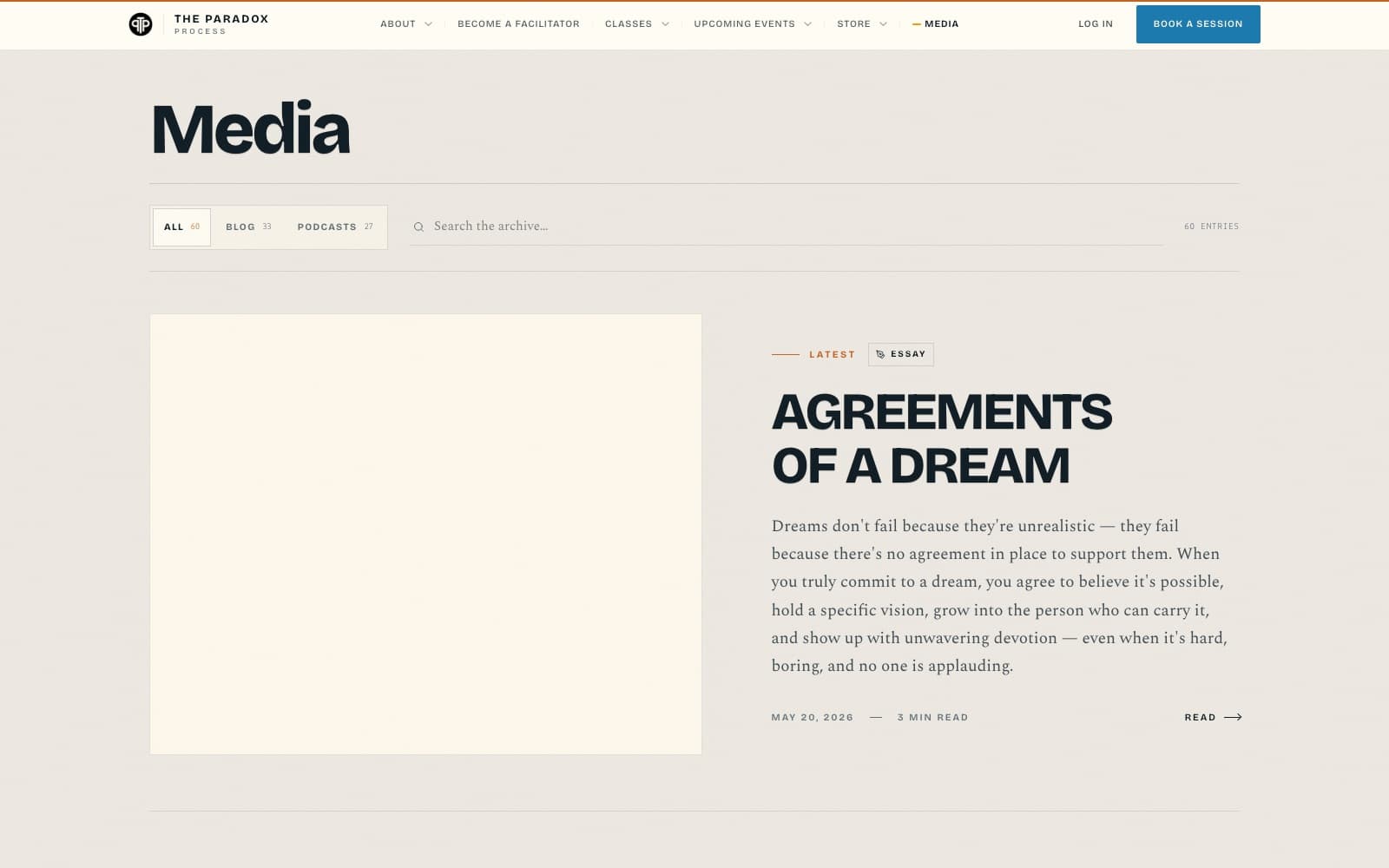
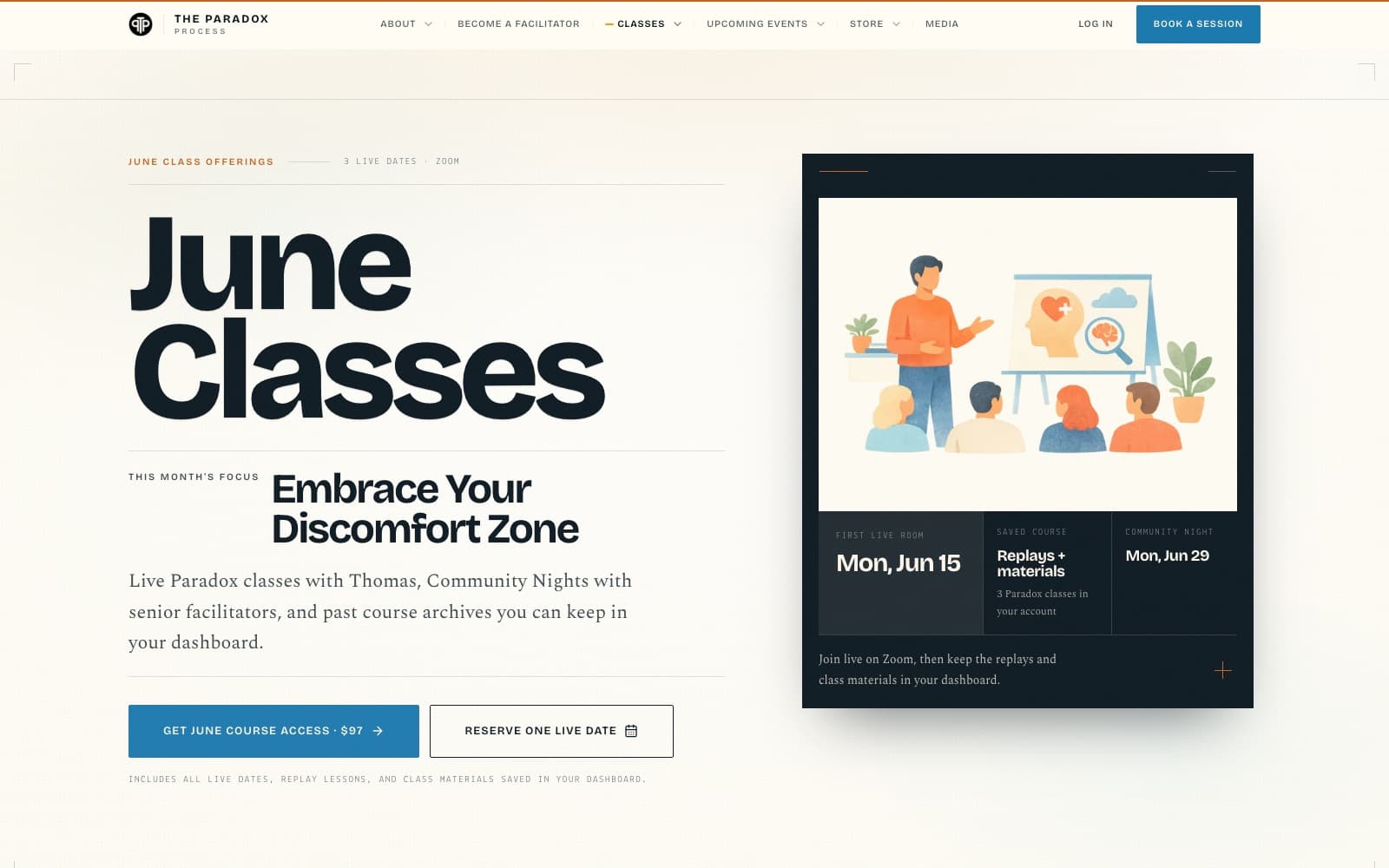

The color rule that holds it together
What I actually did
- Replaced the monthly setup ritual with one evergreen class system: a human enters the topic, the date, and the price — the listing page, the Stripe checkout, the Zoom session, the reminder and replay emails, even the replay course all generate themselves. Reused on purpose, because hand-rewriting emails every month sounded personal in theory and produced typos in practice.
- Built the automation engine underneath it — fifteen step types, including the relative-date delay that Keap flatly could not do.
- Rebuilt the visual language from scratch — warm paper, ink, and a strict two-color accent system with rules for when each color is allowed to speak.
- Designed and shipped the production platform: marketing site, native course delivery with progress tracking, checkout, email automation, and a CMS — replacing Thinkific and Keap outright. 109 pages and 279 API endpoints at last count.
- Wrote 27 migration scripts to move every account, enrollment, course-progress record, and video off the old systems with zero data loss.
- Built the type and color systems so accessibility is mathematical: every tone combination is computed to pass WCAG AA before a human ever picks it.
- Built a tunable AI coaching assistant into the platform: practitioners rate each AI question as charged or flat, and a seven-dimension style vector adapts round by round — with crisis detection that stops the session and surfaces the 988 lifeline.
- Revived the company’s dormant YouTube channel with a Shorts-first strategy, ran Instagram on the same play, and handled SEO — planning, producing, and scheduling everything myself.
The operator side of all of this — the page composer, the campaigns, the scheduling — grew into its own product: Anpa.
Under the hood
Where it landed
- Two SaaS subscriptions gone; the company owns its platform.
- One coherent brand from homepage to checkout to course player.
- 2,000+ commits of shipped, production code in the current build cycle.